What Makes Timely Periodontal Treatment in Ventura So Important
Gum disease rarely announces itself with drama. It usually starts quietly, with a little bleeding at the sink, a faint metallic taste, or tenderness that comes and goes. Many people assume those signs are minor, especially if they are not in obvious pain. That assumption is where trouble begins. By the time periodontal disease becomes impossible to ignore, https://connerqdfv722.evercolumn.com/posts/periodontal-treatment-ventura-what-patients-need-to-know the damage is often deeper, more expensive to manage, and harder to reverse.
That is why timely periodontal treatment matters so much, especially for patients trying to protect not just their smile, but their overall health and long-term dental stability. In a place like Ventura, where many people balance work, family, outdoor activity, and a full schedule, it is easy to put off a gum evaluation for a few months. Unfortunately, gum disease tends to use that time well.
The real issue is not simply infection in the gums. Periodontal disease affects the supporting structures around the teeth, including soft tissue, ligament attachment, and bone. When those structures break down, teeth can loosen, bite patterns can change, and routine care can turn into complex treatment. Timely care gives patients the best chance to stop that progression before it becomes a structural problem instead of a surface one.
Why gum disease tends to be underestimated
Most people are better at noticing cavities than periodontal disease. A cavity often creates a more obvious symptom, such as sensitivity to sweets or pain when chewing. Gum disease, especially in its earlier stages, can feel surprisingly subtle. The gums may bleed during brushing, look a bit puffy near certain teeth, or recede so gradually that the change only becomes clear when compared with old photos.
There is also a persistent myth that bleeding gums are normal. They are not. Healthy gums do not routinely bleed during brushing or flossing. If they do, the tissue is inflamed, irritated, or infected. That does not always mean severe periodontitis is present, but it does mean the mouth is asking for attention.
Another reason the condition gets minimized is that people often think of the gums as separate from the teeth. In practice, the two are inseparable. Teeth may look white and intact on the surface, but without healthy gums and stable bone support, they are vulnerable. A beautiful crown, veneer, or implant cannot compensate for unmanaged periodontal disease around neighboring structures.
Experienced clinicians see this pattern often. A patient comes in focused on a single tooth, perhaps because food traps there or it feels slightly different when biting. The deeper issue turns out to be generalized inflammation, pocketing, or bone loss that has been developing over years. The problem they noticed was real, but it was only the visible edge of a broader condition.
What timely treatment actually changes
Timing matters because periodontal disease is progressive. In its milder form, gingivitis may be reversible with professional cleaning, improved home care, and close monitoring. Once the disease advances into periodontitis, the goal shifts. At that stage, treatment often aims to control infection, reduce pocket depth, preserve supporting bone, and maintain teeth for as long as possible.
That distinction is important. Early intervention can mean simpler care. Delayed intervention often means more appointments, higher costs, and a greater chance that some tissue loss cannot be fully restored.
For patients seeking Periodontal Treatment Ventura providers often explain the issue in straightforward terms. The earlier the infection is addressed, the more options remain on the table. A patient treated when inflammation is localized and bone loss is minimal may only need non-surgical periodontal therapy and careful maintenance. A patient who waits until teeth are mobile or gum recession is pronounced may require surgical intervention, grafting, splinting, extraction, or coordinated restorative planning.
There is also a practical quality-of-life angle. Timely treatment often preserves comfort during everyday activities, chewing confidence, fresher breath, and simpler hygiene routines. Once gum disease advances, patients may need to work around tender areas, food impaction, shifting teeth, or spaces that collect plaque more easily. The burden becomes daily, not occasional.
The biology does not pause while life gets busy
Periodontal disease is driven by bacterial biofilm, but the body’s inflammatory response is what causes much of the tissue destruction. That means the process is not static. It is an active interaction between bacterial accumulation and host response. Stress, smoking, diabetes, hormonal changes, dry mouth, medications, and inconsistent oral hygiene can all influence how quickly the condition worsens.
This is one reason delays can be costly in ways people do not expect. They assume that if symptoms are tolerable now, the disease is stable. In reality, gum disease can have periods of relative quiet followed by episodes of accelerated breakdown. A patient may go months with only minor bleeding, then suddenly notice recession, sensitivity near the roots, or a tooth that feels slightly loose.
Clinically, those transitions matter. When a periodontal pocket deepens, it becomes harder for a toothbrush or floss to disrupt bacterial buildup effectively. As access decreases, the infection becomes more self-sustaining. Professional care can reestablish a healthier environment, but waiting allows deeper colonization and more chronic inflammation.
Ventura patients are not unique in this regard, but the local rhythm of life can make postponement easy. Someone with a busy service job, school pickups, surfing before work, or seasonal business demands may keep shifting dental care down the list. From a scheduling standpoint, that feels harmless. Biologically, it often is not.
Early signs people should not ignore
Not every symptom means advanced periodontal disease, but several signs deserve prompt evaluation. Even patients with otherwise good oral hygiene can develop localized issues around old dental work, crowded teeth, or areas where plaque retention is persistent.
Watch for changes like these:
- Bleeding during brushing or flossing that happens repeatedly
- Gums that appear swollen, shiny, or darker red than usual
- Persistent bad breath or a bad taste that returns quickly
- Gum recession, longer-looking teeth, or new sensitivity near the roots
- Teeth that feel slightly loose, shift, or trap food in new ways
These findings do not all carry the same urgency, but none should be dismissed casually. A single isolated bleeding point may reflect local irritation. Generalized bleeding and recession suggest a broader inflammatory picture. Mobility, spacing changes, or chewing discomfort raise the stakes because they may indicate attachment and bone loss.
What a timely periodontal evaluation usually involves
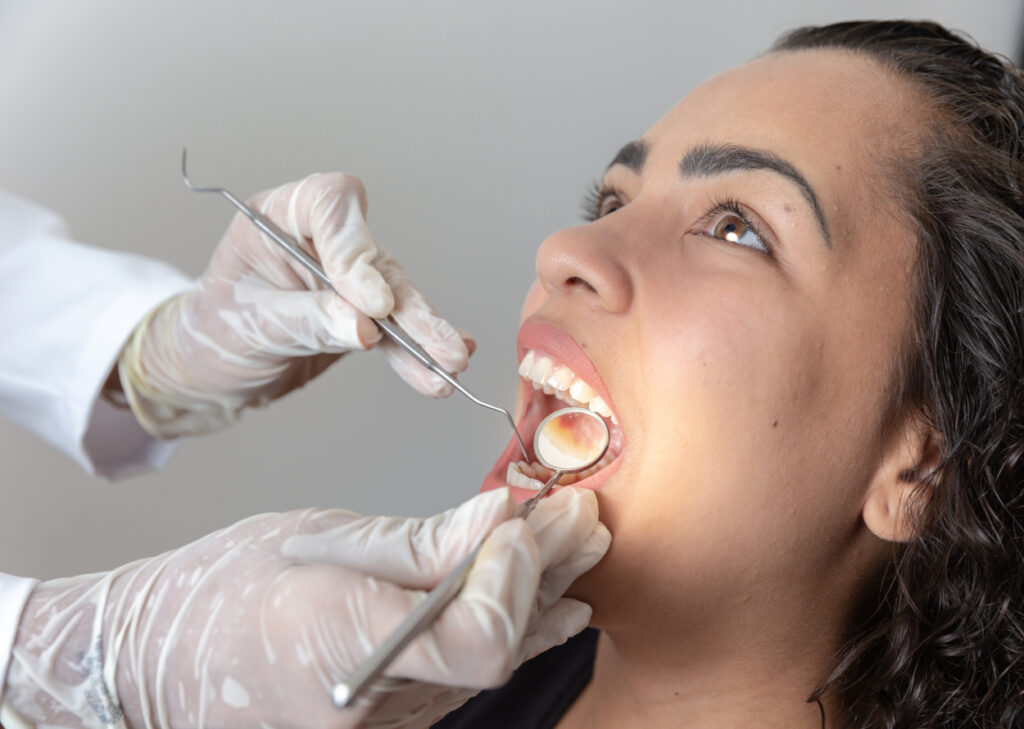
A proper periodontal assessment is more than a quick glance at the gums. In most cases, a clinician will evaluate pocket depths around each tooth, gum inflammation, recession, bleeding points, plaque accumulation, bone levels visible on radiographs, and any mobility or furcation involvement. Existing crowns, bridges, fillings, and bite forces are also relevant because they can affect plaque retention and tissue stress.
For many patients, the exam itself brings relief because it replaces uncertainty with specifics. Instead of vaguely knowing that the gums bleed, they learn whether the issue is mild gingivitis, localized periodontitis, or more generalized disease. That distinction shapes treatment planning and prognosis.
The conversation should also account for medical history. Diabetes control, smoking or vaping, autoimmune conditions, pregnancy, and medications that affect saliva or gum tissue can all change risk level and treatment response. Good periodontal care is not one-size-fits-all. Two patients with similar pocket depths may need somewhat different strategies depending on the bigger clinical picture.
Treatment is often less intimidating than patients expect
Many people delay care because they assume periodontal treatment will be painful, surgical, or overwhelming. Sometimes surgery is appropriate, but very often the first phase is non-surgical. This may include deep professional cleaning below the gumline, debridement of bacterial deposits, antimicrobial support in selected cases, targeted home-care instruction, and a maintenance schedule tailored to disease severity.
Patients are often surprised by how manageable this can be when done before severe progression. Numbing options, modern instrumentation, and thoughtful pacing make treatment far more comfortable than old assumptions suggest. More important, once inflammation starts to come down, many patients notice improvement quickly. Bleeding decreases, tenderness settles, breath improves, and brushing becomes less unpleasant.
That said, clinicians should not oversell simplicity. If disease is advanced, treatment may require more than one phase. Some cases call for referral to a periodontist, especially where there is significant bone loss, complex root anatomy, gum grafting needs, or implant-related concerns. Timely care still matters in these situations because it can limit how much additional damage occurs before specialty treatment begins.
The cost of waiting is usually more than financial
Patients often postpone treatment because they are worried about expense. That concern is understandable. Dental care can strain a household budget, particularly when coverage is limited. But from a long-range standpoint, delaying periodontal treatment tends to create bigger financial and functional problems, not smaller ones.
A patient who addresses moderate disease early may need scaling and root planing, reevaluation, and periodontal maintenance. A patient who waits until teeth are compromised may face extraction, bone grafting, implant planning, temporary replacement options, or larger restorative work to stabilize the bite. The difference in time, complexity, and cost can be substantial.
There is also the issue of salvageability. Not every tooth can be saved indefinitely, even with excellent care. The question is often whether intervention happens early enough to preserve strategic teeth and maintain a stable, comfortable dentition for years. Once enough support is lost, the treatment discussion shifts from preservation to replacement.
Emotionally, that shift can be difficult. People often form strong attachments to keeping their natural teeth, and for good reason. Natural teeth provide feedback, stability, and familiarity that replacement options, while valuable, do not replicate perfectly. Saving them when possible is usually worth serious effort.
The mouth does not operate separately from the rest of the body
Claims about oral-systemic health can sometimes be overstated, so it is best to stay grounded. Periodontal disease does not mean a person will automatically develop major medical problems. At the same time, chronic gum inflammation is not trivial. It reflects an ongoing inflammatory burden, and it often interacts with broader health conditions.
The clearest relationship in daily practice is with diabetes. Poor glycemic control can worsen periodontal inflammation, and untreated periodontal disease can make diabetic management harder. It is a two-way street, and patients frequently benefit when both issues are addressed together.
Cardiovascular discussions deserve nuance. Gum disease is associated with systemic inflammation and may correlate with heart health risks, but it should not be described casually as a direct one-cause explanation. What can be said confidently is that reducing chronic oral inflammation is a sensible part of health maintenance, especially for people already managing other medical concerns.
Pregnancy is another context where gum health deserves attention. Hormonal shifts can make gums more reactive, and preexisting inflammation may worsen if hygiene becomes difficult due to nausea or fatigue. Timely evaluation during pregnancy is often a practical, preventive step.
Ventura-specific realities that can influence gum health
Local living conditions can shape oral habits more than people realize. Ventura’s climate, active lifestyle, and strong coffee culture all sound harmless, yet they can intersect with gum health in real ways. Dehydration from long beach days, mouth breathing during outdoor exercise, and frequent acidic or sugary drinks can affect saliva flow and plaque behavior. None of these factors cause periodontal disease by themselves, but they can contribute to an environment where inflammation persists more easily.
Smoking remains one of the strongest risk factors, and that includes forms people sometimes view as less concerning. Traditional cigarettes, cigars, and some vaping patterns can compromise tissue response and healing. One of the frustrating things about smoking-related periodontal disease is that gums may bleed less, which gives a false sense that things are fine even while destruction progresses beneath the surface.
Ventura also has many patients who keep up appearances well. Their teeth may look relatively clean, and they may brush regularly, but if they have a history of inconsistent professional care, old restorations with difficult margins, or untreated clenching, periodontal issues can still advance quietly. Cosmetic appearance is not the same as periodontal health.
Maintenance is where long-term success is won
Initial treatment matters, but maintenance determines durability. Gum disease can be controlled very effectively in many patients, yet control is not the same as cure in the absolute sense. Once a person has had periodontitis, they remain more vulnerable to recurrence. That means follow-up intervals matter, home care matters, and changes in health status matter.
The most successful patients are usually not the ones with perfect technique from day one. They are the ones who stay engaged. They return for reevaluation, ask questions, adapt their hygiene tools, and respond early when something feels off. A three-month periodontal maintenance interval may seem frequent until a patient experiences how much more stable the mouth feels when inflammation is kept from rebuilding.
A practical home routine often includes a soft toothbrush or power brush, interdental cleaning suited to the spaces present, and attention to areas around bridges, implants, or crowded teeth. The right tools vary. Floss works well for some people, while interdental brushes, water flossers, or specialty cleaners are more effective for others. The point is not to perform every possible hygiene method. It is to use the few that actually reach the problem areas consistently.
Cases that especially benefit from acting quickly
Certain situations deserve especially prompt attention because delay tends to change the prognosis faster. This includes patients with uncontrolled diabetes, smokers, those with a family history of early tooth loss, and anyone who has already had periodontal therapy in the past. Recurrence can be subtle, and previous treatment does not make a person immune.
The same is true for patients planning major dental work. If someone is considering veneers, crowns, implants, orthodontics, or full-mouth rehabilitation, the gums need to be stabilized first. Restorative work placed into an unhealthy periodontal environment is more likely to fail, look compromised, or become difficult to maintain. Good clinicians know that healthy foundations come before cosmetic or reconstructive refinement.
There is also urgency when a patient notices a tooth drifting, spaces opening, or a sudden change in the way the front teeth meet. Those are not merely cosmetic developments. They can signal altered support and active disease. Treating at that stage may still preserve function well, but waiting invites more movement and more complicated correction.
How to think about timing if you are unsure
Patients often ask whether a symptom can wait until their next regular cleaning. Sometimes it can. Sometimes it should not. A good rule is that repeated bleeding, persistent swelling, gum recession, or any feeling that a tooth is changing position deserves a sooner evaluation rather than a later one.
A useful way to frame the decision is this:
- If the issue is getting worse, do not wait
- If a tooth feels loose or your bite feels different, schedule promptly
- If bleeding has continued for more than a week or two despite careful home care, get it checked
- If you have diabetes, smoke, or have had gum treatment before, lower your threshold for calling
- If you are about to start major dental work, ask for a periodontal assessment first
That kind of timing saves more than appointments. It protects options.
What patients usually notice after timely care
When periodontal treatment happens before the disease becomes severe, the improvements are often practical and immediate. Patients commonly report less bleeding, less tenderness, fresher breath, and a cleaner feeling that lasts longer between brushing sessions. They also gain clarity. Instead of guessing whether a symptom matters, they understand their risk level and what maintenance will realistically require.
One patient described it well after finally addressing persistent gum bleeding she had ignored for nearly a year. She expected a lecture and a difficult procedure. What she got was a clear explanation, localized treatment, and a maintenance plan she could actually follow. A month later, she said the biggest surprise was not cosmetic, it was how much less she worried every time she brushed. That kind of relief is easy to underestimate until you see it repeatedly in practice.
Timely care does not promise perfection. Some recession does not grow back on its own. Some bone loss cannot be undone completely. Some teeth, despite best efforts, have a guarded prognosis. But earlier treatment often turns a crisis into a manageable condition. It preserves stability, limits escalation, and gives patients a fair chance to keep their natural teeth functioning comfortably for years.
That is what makes prompt periodontal care in Ventura so important. It is not only about treating an infection. It is about protecting the structures that let the rest of dentistry succeed, preserving daily comfort, and preventing a quiet disease from becoming a much larger one.
Avra Dental
Address: 1708 S Victoria Ave B, Ventura, CA 93003
Phone number: (805) 941-1001
FAQ About Periodontal Treatment Ventura
Can a dentist get rid of periodontal disease?
A dentist or gum specialist (periodontist) cannot fully cure or reverse advanced periodontal disease (periodontitis), but they can successfully stop its progression and manage the infection.
Is periodontitis very serious?
Yes, periodontitis is a very serious, advanced form of gum disease that destroys the bone and tissues supporting your teeth.
How is stage 2 periodontal disease treated?
Stage 2 periodontal disease (early to moderate periodontitis) is primarily treated with non-surgical deep cleaning procedures like scaling and root planing to remove bacteria and tartar below the gumline.
Corrections
Spot something wrong? Send it to the desk and it gets fixed in the open.